

Creative Proteomics has developed a reliable and reproducible method using highly sensitive LC-MS/MS method for the rapid identification and quantification of Epoxyeicosatrienoic Acids (EETs) in different sample types, which can satisfy the needs of academic and industrial study in your lab.
Overview
Epoxyeicosatrienoic acids (EETs), which are synthesized from arachidonic acid by cytochrome P450 epoxygenases (CYP), function primarily as autocrine and paracrine effectors in the cardiovascular system and kidney. They modulate ion transport and gene expression, producing vasorelaxation as well as anti-inflammatory and pro-fibrinolytic effects.
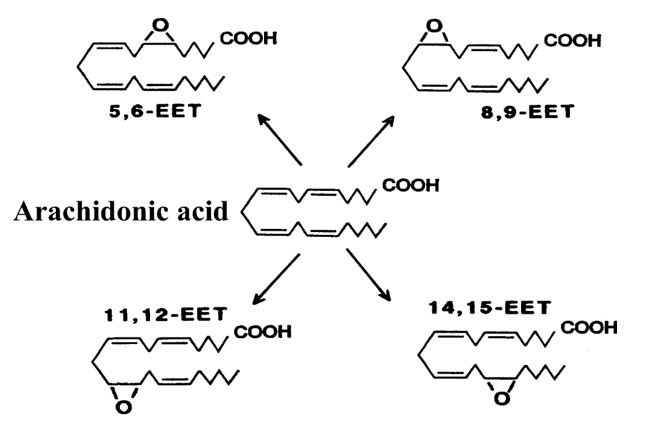 Fig1. EET regioisomers synthesized from arachidonic acid by CYP epoxygenases (Spector, Arthur A.; et al, 2004)
EETs are incorporated into the sn-2 position of phospholipids and are rapidly mobilized when a cell is treated with a Ca2+ ionophore, suggesting that they may play a role in phospholipid-mediated signal transduction processes. Soluble epoxide hydrolase (sEH) converts EETs to dihydroxyeicosatrienoic acids (DHETs), and inhibition of sEH is a potential approach for enhancing the biological activity of EETs. EETs also undergo chain-elongation and β-oxidation, and the accumulation of partial β-oxidation products increases when sEH is inhibited. Some functional effects of EETs occur through activation of either the guanine nucleotide binding protein Gαs or the Src signal transduction pathways, suggesting that EETs act by binding to membrane receptors.
The combination of MS instrument and liquid chromatography (LC) can effectively separate target lipid molecules from complex samples. High-quality and accurate lipid level analysis helps to study the changes in the content of EETs under physiological and other pathological conditions, and accelerate the analysis of biomarkers and related disease mechanisms.
Why Choose Us?
- We use liquid chromatography hyphenated to triple quadrupole mass spectrometers for our EETs targeted lipidomics services, to provide high-specificity, high-selectivity, and high-reproducibility detection and quantitation of EETs.
- One-stop analysis services, from sample preparation, mass spectrometry, data processing, to the identification and quantification of lipids.
- Rich experience in handling various types of samples, from various tissue and cell samples to serum, etc.
- Flexible statistical analysis and bioinformatics analysis.
List of Detectable EETs at Creative Proteomics
| 5,6-EET | 8,9-EET | 11,12-EET | 14,15-EET |
Our Epoxyeicosatrienoic Acids Analysis Service
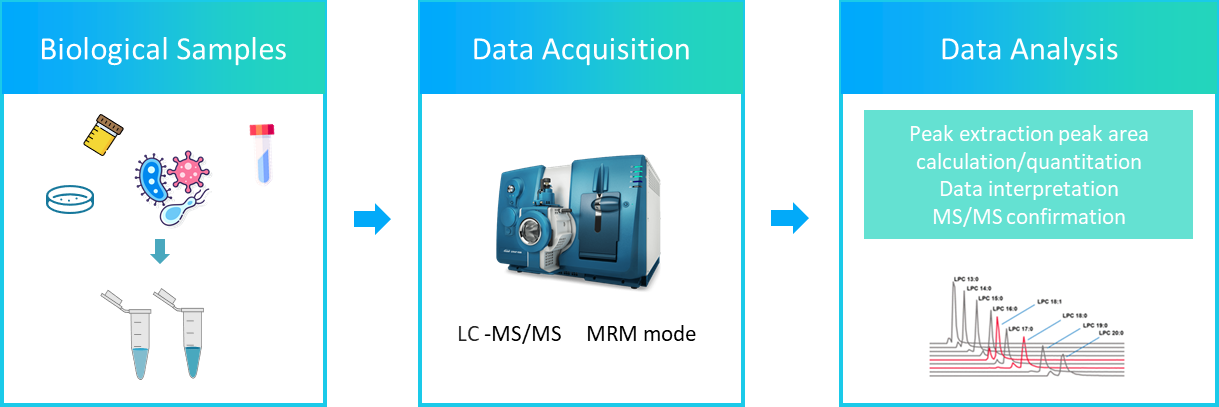 Fig 2. The workflow of EETs analysis service
Structural details: species level
Mode: MRM
Precision: pmol & mol%
Delivery time: 2-4 weeks
Sample requirements
Blood/plasma: 100-200 ul/sample
Cells: 1x10⁷/sample
Tissue: 50-100 mg/sample
Deliverables
- Experimental procedure
- Parameters of liquid chromatography and MS
- Purity analysis report
- MS raw data files and MS data quality checks
- Hexylceramide quantitative result data
- Custom analysis report
Based on a highly stable, reproducible and highly sensitive separation, characterization, identification and quantitative analysis system, combined with LC-MS/MS, Creative Proteomics provides reliable, fast and cost-effective EETs analysis services. If you have any questions about our EETs targeted lipidomics services, please contact us.
Reference:
- Spector, Arthur A.; et al. Epoxyeicosatrienoic acids (EETs): metabolism and biochemical function. Progress in lipid research. 2004, 43.1: 55-90.