

What Can Lipidomics of Plant Vegetative Organs Tell You?
- Mature leaves and new shoots of tea plant grown under three N levels at the rates of 0, 285 and 474 kg/ha were applied for UPLC/MS based lipidomic analysis;
- The results showed that the higher content of the storage lipid TAG and higher carbon (C)/N ratio in mature leaves than that of new shoots in tea plants grown under low N level (0 kg/ha).
- N fertilization resulted in a higher content of the compounds 36:6 MGDG and 36:6 DGDG; Since these compounds contain linolenic acid (18:3), a precursor to the formation of aroma origin compounds, the study suggested their increase could contribute to the quality of tea.
Creative Proteomics provides reliable, rapid and cost-effective plant vegetative organs untargeted lipidomics based on LC-MS, shot-gun methods for biomedical research institutions, biotechnology and pharmaceutical companies.
Our Services
- Sample
- Plant vegetative organs from any plant species for lipid analysis (leaves, roots, or stem);
- Sample storage: Extraction of lipids should be performed right after sample collection steps, otherwise, samples should be stored at -80°C, and shipped with dry ice;
- Sample pretreatment: After sample collection, you can either perform sample pretreatment, or contact us for specific sample pretreatment service.
- Our Process
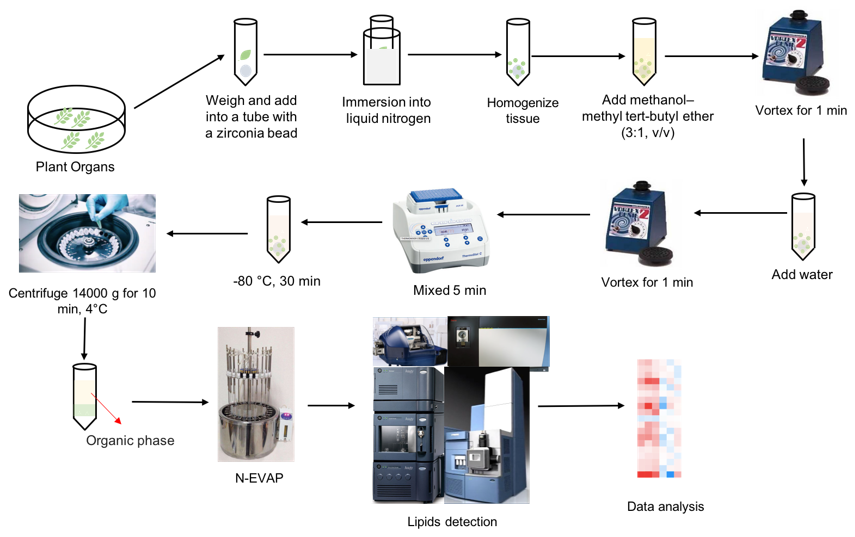 Fig1. The protocol workflow of plant vegetative organs untargeted lipidomics. (Creative Proteomics)
We also provide other lipid extraction methods according to your experimental needs.
Application of Plant Vegetative Organs Untargeted Lipidomics
- Stress-induced change of plant vegetative organs lipidomics (Heat, Freeze, Drought, Salt);
- Injury-induced change of plant vegetative organs lipidomics;
- Development and aging induced change of plant vegetative organs lipidomics.
Our Advantages
- One-stop services, including lipid extraction, lipid detection and data analysis;
- Send us your sample and receive data in 4-6 weeks, a low requirement for samples;
- Cutting-edge apparatuses, reliable data and reproducible process;
- Creative Proteomics provide a detailed report to our clients, including experiment procedures and parameters of instruments, MS data with putative identification based on the m/z ratio of the analytes, differential analysis of lipids between treatment groups if needed.
If you have any questions about our plant vegetative organs untargeted lipidomics services, welcome to contact us.
References:
- Liu, M.;. et al. Lipidomics analysis unravels the effect of nitrogen fertilization on lipid metabolism in tea plant (Camellia sinensis L.). BMC Plant Biol. 2017, 17, 165.
- Okazaki.;. et al. Plant Lipidomics Using UPLC-QTOF-MS. Plant Metabolomics. 2018,157-169.