

Lysophosphatidylinositol (LPI) is a bioactive lipid generated by phospholipase A2 which is believed to play an important role in several diseases. Indeed LPI can affect various functions such as cell growth, differentiation and motility, in a number of cell-types, including cancer cells, endothelial cells and nervous cells.
Non-receptor mediated effects of LPI
LPLs can modify the properties of membranes by altering membrane curvature. Based on this, the effects of LPLs as regulators of membrane proteins have been well characterised. A good example of this is represented by the demonstration that LPI can activate the 2-pore domain K+ channels TREK-1 and TRAAK. These channels are important regulators of synaptic function by regulating the neurone membrane potential.
Receptor mediated effects of LPI
Accumulating data have now demonstrated that most of the biological effects of LPI are mainly mediated by the receptor GPR55. LPI was the only one able to induce ERK1/2 phosphorylation through GPR55.
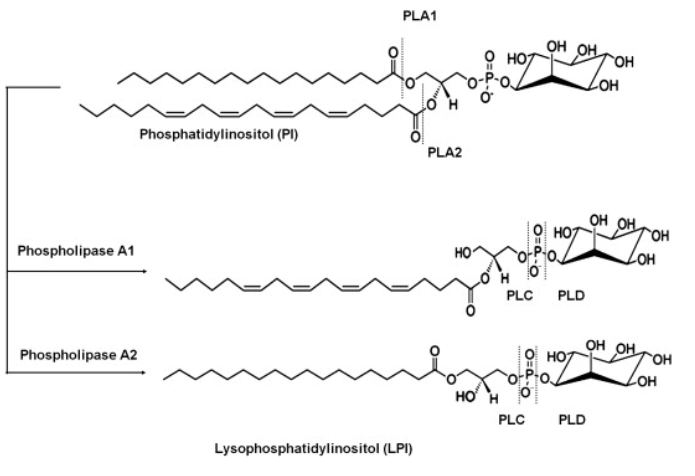 Fig 1. Lysophosphatidylinositol synthesis and degradation (Piñeiro R et al., 2012)
To better explore the regulatory function, role and related mechanisms of LPI, Creative Proteomics provides reliable, rapid and cost-effective lysophosphatidylinositol analysis based on highly stable, reproducible and sensitive separation, characterization, identification and quantification systems in combination with LC-MS/MS.
Our Lysophosphatidylethanolamine Analysis Service
Absolute quantification: Use external standard method to quantify, and use internal standard for correction, qualitative and quantitative is more accurate.
High sensitivity: We use liquid chromatography coupled with triple quadrupole mass spectrometers for lysophosphatidylethanolamine analysis service (Triple Quad™ 6500 LC-MS/MS System).
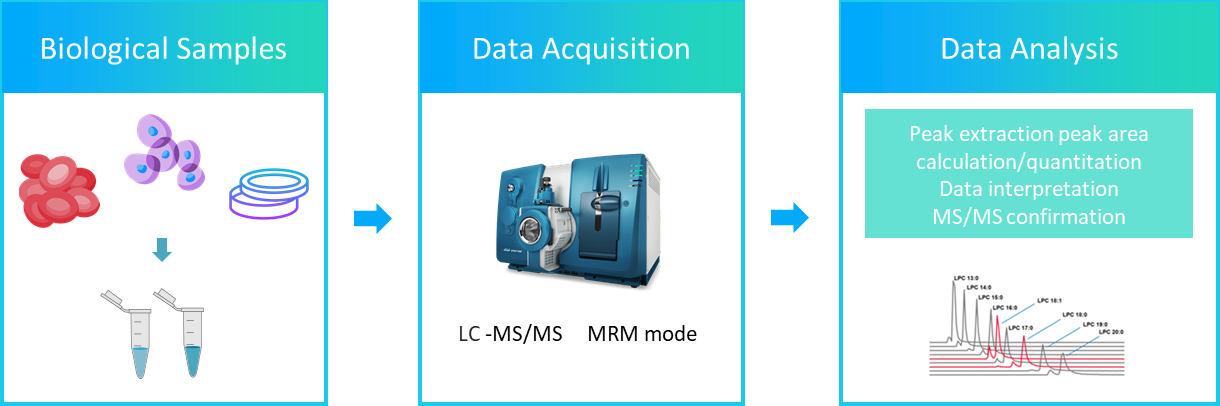 Fig 2. The workflow of lysophosphatidylethanolamine analysis service
Sample Requirements
We routinely cover a rich variety of sample types, including cells, tissue, blood and plasma.
| Plasma | Tissue | Cells | |
|---|---|---|---|
| Minimal Volume | 50 uL | 30 mg | 5*106 |
| Normal Volume | 100 ul | 50 mg | 2*107 |
Why Choose Us?
- Fast turnaround time: Quality lipidomics services at a low price and fast turnaround time. Send us your samples and receive your results within 1-4 weeks.
- High throughput: Only one injection can run both quantitative MRM and qualitative QTRAP scans to maximize throughput.
- One-stop analysis service: Provide comprehensive services from sample preparation, standard addition, mass spectrometry analysis, data processing, and data comparison.
- Detailed report: Experimental process, MS/MS instrument parameters, quality control parameters, raw data and the final result of the comparison.
- We will use our expertise to help you interpret the results and provide you with actionable recommendations on how to utilize these results in your research or business.
If you have any questions about our lysophosphatidylethanolamine detection service, please contact us.
Reference:
- Piñeiro R.; Falasca M. Lysophosphatidylinositol signalling: new wine from an old bottle. Biochimica et Biophysica Acta (BBA)-Molecular and Cell Biology of Lipids. 2012, 1821(4): 694-705.