

The various stress responses of microorganisms are accompanied by disordered lipid metabolism. Therefore, the study of lipid biomarkers is very important for the study of microorganisms. Here is a related study.
- To reveal differences between inhibitor-resistant Saccharomyces cerevisiae strains and their parental strain and to investigate the response of S. cerevisiae to furfural, phenol, and acetic acid, comparative lipidomics strategy was employed using an LC-ESI/MS technique on four S. cerevisiae strains, which include an industrial strain (SC) and three tolerant strains screened by this laboratory by step adaptation—a furfural-tolerant strain (SCF), a phenol-tolerant strain (SCP), and an acetic acid-tolerant strain (SCA);
- Results revealed that phosphatidylcholines (PCs), phosphatidylinositols (PIs), and phosphatidic acids (PAs) were biomarkers for discriminating SC from SCF, SCP, and SCA, respectively. PIs were believed to be extraordinarily important in all inhibitor-tolerant processes because they were the biomarkers responsible for the discrimination of all four different strains;
- Further analysis of the distribution of different hydrocarbon chains revealed that both the saturation and the length of the chains helped in maintaining proper fluidity of membranes.
Creative Proteomics provides reliable, rapid and cost-effective microorganisms untargeted lipidomics based on LC-MS or shot-gun methods for microorganisms lipid biomakers research.
Our Services
- Samples
Creative Proteomics routinely cover a rich variety of sample types, including bacteria, virus, fungus and parasites for our customer. Still, our services require only minimal sample amounts per analysis.
If you have any questions about sample collection, please contact us.
- Our Process
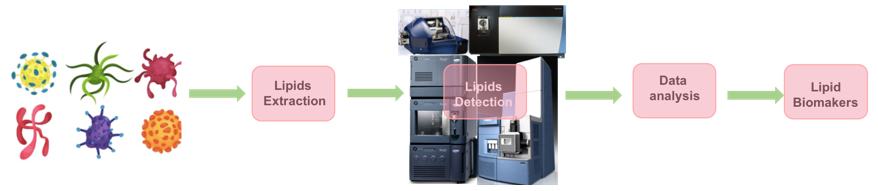 Fig1. The protocol workflow of lipidomics in microorganisms biomakers research (Creative Proteomics)
What Creative Proteomics Provides for Our Customers?
- Send us your serum samples and recive results in 2-4 weeks;
- Creative Proteomics provides a comprehensive visual report of the results. The report will help to answer your study questions, and hopefully create a few new ones to follow;
- Creative Proteomics full-service facility provides data processing (e.g., data alignment, feature detection), feature prioritization (e.g., principal component analysis, heat maps, ANOVA/t-test, multivariate statistical analysis, self organizing maps, volcano plots, and network activity prediction), and lipid identification services.
If you have any questions about our microorganisms untargeted lipidomics services, welcome to contact us.
Reference:
- Xia J M.; Yuan Y J. Comparative lipidomics of four strains of Saccharomyces cerevisiae reveals different responses to furfural, phenol, and acetic acid[J]. Journal of Agricultural and Food Chemistry. 2009, 57(1): 99-108.